


 APAC / English
 Latin America / Español
 India / English
 France / Français
 Africa / English
 Europe / English
 US / English
The glut of engine oils available can quickly induce analysis paralysis. But picking the right motor oil for your car is important – especially in climates like Australia!
Start with some manual labour
First, consult your vehicle owner’s manual. Inside its intimidating bulk you’ll find the original equipment manufacturer’s (OEM) motor oil recommendation. Look for a couple key points:
- Engine oil viscosity
- Performance or industry specifications the oil should meet

The OEM will recommend a motor oil of a specified viscosity that meets the appropriate performance or industry specifications. For example, the OEM might tell you to use a 5W-30 oil that meets the API SN PLUS specification, or equivalent.
When choosing oil for your car, at the very least use an oil that hits those two checkboxes.
Why Is Viscosity So Important?
Viscosity refers to a fluid’s resistance to flow. The higher the viscosity, the more slowly it flows. Honey, for example, has a higher viscosity than water.
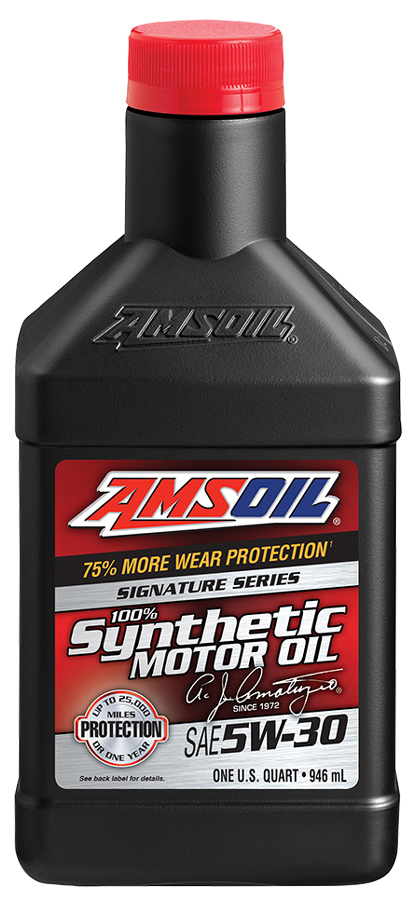
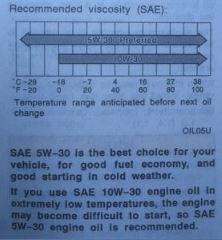
Viscosity is the most important property of engine oil. Your engine was built to use a motor oil of a specific viscosity. Today, 5W-30 is the most widely recommended oil viscosity. The “5W” rating refers to the oil’s viscosity when it’s cold (40ºC). The “30” rating refers to the oil’s viscosity when it’s hot (100ºC).
Oil thickens when it’s cold (it’s viscosity increases). Alternatively, it thins when it’s hot (it’s viscosity decreases).
If you use an oil that thickens too much in the cold, the oil won’t circulate throughout the engine as readily, leading to wear. If you use an oil that thins too much when it’s hot, it can fail to keep metal engine components separated during operation, also leading to wear.
You can see the importance of using the correct viscosity of oil in your car. That’s why it’s always printed clearly on the product label.
We should note that some OEMs allow you to use different viscosities of oil depending on ambient conditions. For example, you can use 5W-30 motor oil during the winter and switch to 10W-30 in summer. That’s because, as mentioned, lower-viscosity oils flow better in the cold for easier starts and better startup protection.
In these cases, simply follow the OEM’s guidelines and you’ll be fine.
Engine Oil Specifications
That brings us to industry and performance specifications. Although confusing, engine oil specifications are there to help you pick the right oil for your car.
Engine oils sold in Australia are covered by oil classification systems, including the Society of Automotive Engineers (SAE) and the American Petroleum Institute (API).
API publishes the engine oil specification with which motorists are most familiar. The current version is API SN PLUS. Every few years, the API updates its specifications to ensure the motor oils available to you are formulated to protect the latest and most demanding engines.
What Is an Engine Oil Specification?
It’s a set of minimum performance requirements an oil must demonstrate in a range of industry tests. These tests measure oil consumption, deposit formation, the ability of the oil to flow in sub-zero cold and more.
The API, working with different automakers, determines the minimum performance level the oil must demonstrate for the oil manufacturer to recommend its oils for the latest API specification. The OEM, in turn, often recommends in the owner’s manual using an oil that meets the latest API specification, or equivalent.
This provides reassurance that the oil you’re using meets a minimum level of performance the API deems appropriate to protect your engine.
But which kind of oil should we use?
- Synthetic
- Synthetic-blend
- Conventional
Synthetic Engine Oil
Synthetic engine oil offers the best protection and performance of the three options. It doesn’t contain the impurities inherent to conventional oils, meaning it provides improved resistance to extreme heat, better wear protection and maximum cold-flow properties when the temperature drops. That translates into a cleaner, longer-lasting engine.
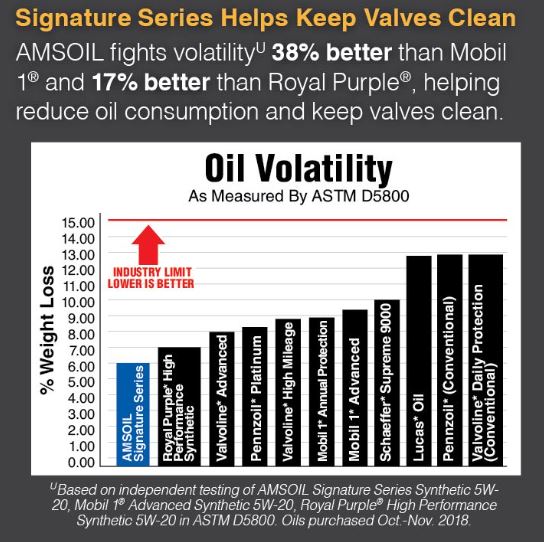
AMSOIL Signature Series Synthetic Motor Oil demonstrates the lowest volatility, which helps reduce oil consumption and keep your engine clean. The conventional oils are clearly slacking compared to their go-getter synthetic counterparts. You can also see performance differences between the synthetic oils, meaning they’re not all created equal.
Synthetic-blend Engine Oil
Synthetic-blend, or semi-synthetic, is simply a mixture of synthetic and conventional oils. It’s designed to provide improved protection compared to conventional oil without the higher initial price of synthetic motor oil.
The drawback, however, is that there’s no telling how much “synthetic” is in your synthetic-blend motor oil since there are no industry regulations that require oil companies to publish that information.
Conventional Engine Oil
Finally, we have conventional oil. Unlike synthetic oils, which are manufactured using a chemical-reaction process, conventional oils are refined from crude oil. The refining process removes some impurities inherent to crude, but it can’t remove them all. As such, conventional oil contains molecules detrimental to lubricating an engine, such as sulphur and waxes.
Conventional oil is more prone to cause harmful deposits when exposed to heat and thicken in the cold. This makes it more difficult to start your engine, and chemically breakdown sooner, requiring more frequent changes.
When picking an oil for your car, you can find synthetics, synthetic-blends and conventional oils of the correct viscosity that meet the performance requirements recommended in the owner’s manual. While they all may be safe to use in your car, they don’t provide nearly the same protection or performance.
If you’re driving a beater that heralds its arrival with a plume of blue smoke and a cacophony of slapping pistons and knocking rods, use the cheapest oil that meets the OEM requirements.
But if you want the best for your engine, use synthetic motor oil.